How Garment Dyeing Works: A Factory Guide for Shirts and Workwear
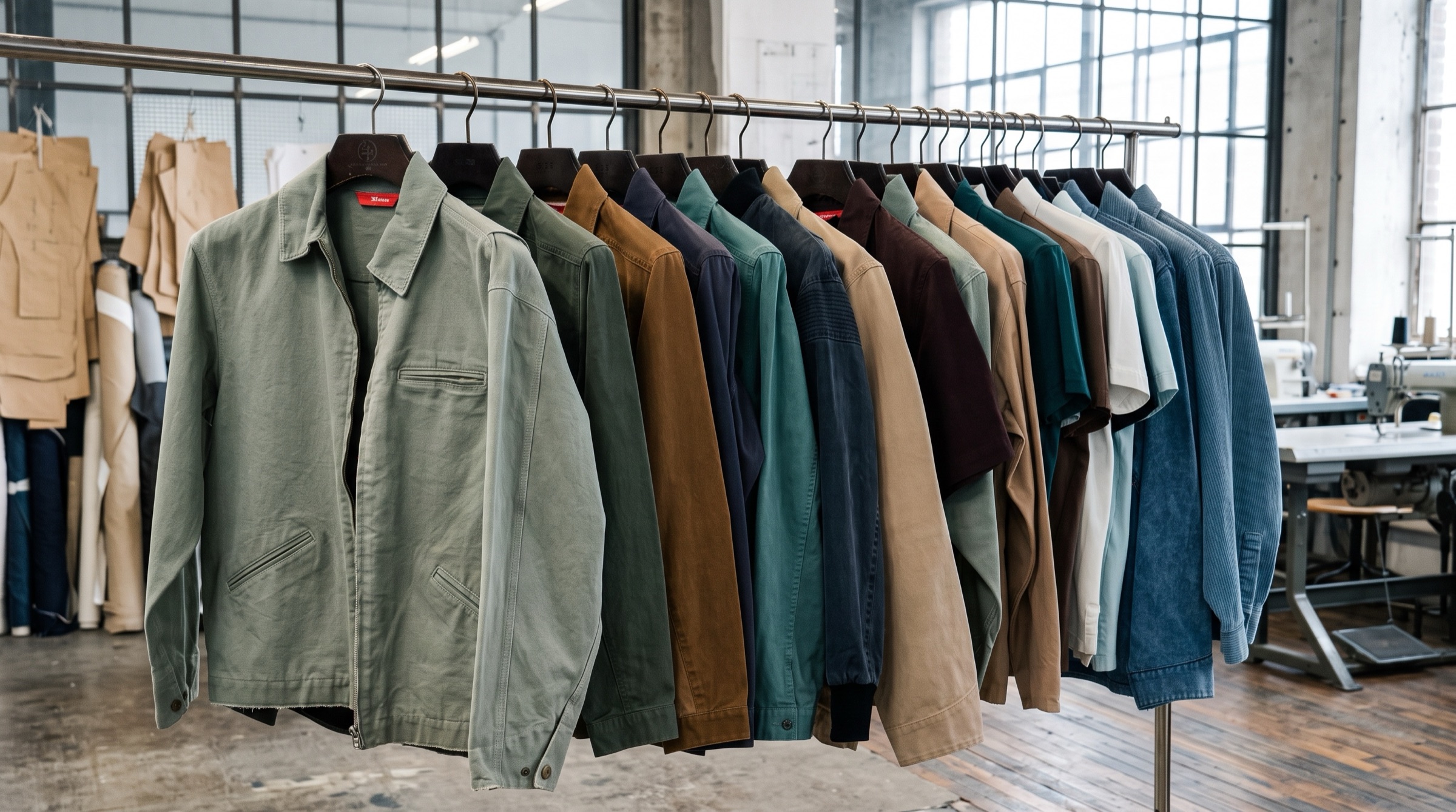
How garment dyeing works on woven shirts, overshirts and workwear, step by step from PFD fabric to the final wash, and what it changes in the finished garment.
Garment dyeing means sewing a shirt or jacket from undyed fabric first, then dyeing the whole finished garment in a drum. Because color goes in last, the seams, pockets and collar take it slightly differently, which gives garment-dyed clothing its soft hand and lived-in depth of color.
This guide covers woven garments: shirts, overshirts, chore coats and work jackets. They are harder to garment dye than T-shirts, because they have collars, interlining, buttons, several layers of fabric and tighter sizing. Below is what actually happens on the factory floor, step by step, and what it changes in the garment you receive. If you want the history and why the look is back, start with Why Garment Dyeing Made a Comeback.
Key takeaways
- The garment is cut and sewn from undyed PFD fabric, and color is decided at the very end.
- Garment-dyed wovens shrink more than piece-dyed ones, so the pattern has to be graded up before cutting.
- Shade differences at seams, pockets and collars are a feature of the process, and can be designed in.
- Thread, interlining, buttons and labels all go into the dye bath, so they have to be chosen for it.
Garment dyeing vs. piece dyeing vs. yarn dyeing
There are three points in production where color can go in. Which one you choose shapes how the garment looks, feels and fits.
Yarn dyeing colors the yarn before weaving.
- Best for: plaids, stripes, chambray and anything with a woven-in pattern.
- Color: crisp and precise; every thread is its own color.
- Example: our yarn-dyed flannel shirt. A plaid can only be made this way.
Piece dyeing colors the fabric by the roll, before it is cut.
- Best for: solid-color shirts and jackets where every piece must match exactly.
- Color: flat and uniform from collar to hem.
- Fit: the fabric is already stable, so the sewn size is the final size.
Garment dyeing colors the finished garment.
- Best for: solid colors with depth, a soft hand and a worn-in look.
- Color: shade varies slightly at seams, pockets and collars, and from piece to piece.
- Fit: the garment shrinks during dyeing, so the pattern must allow for it.
- Example: our garment-dyed chore jacket.
None of these is "better". Garment dyeing trades perfect uniformity for character. Brands choose it because they want that character, but the variation has to be managed, or it stops looking intentional and starts looking like a defect.
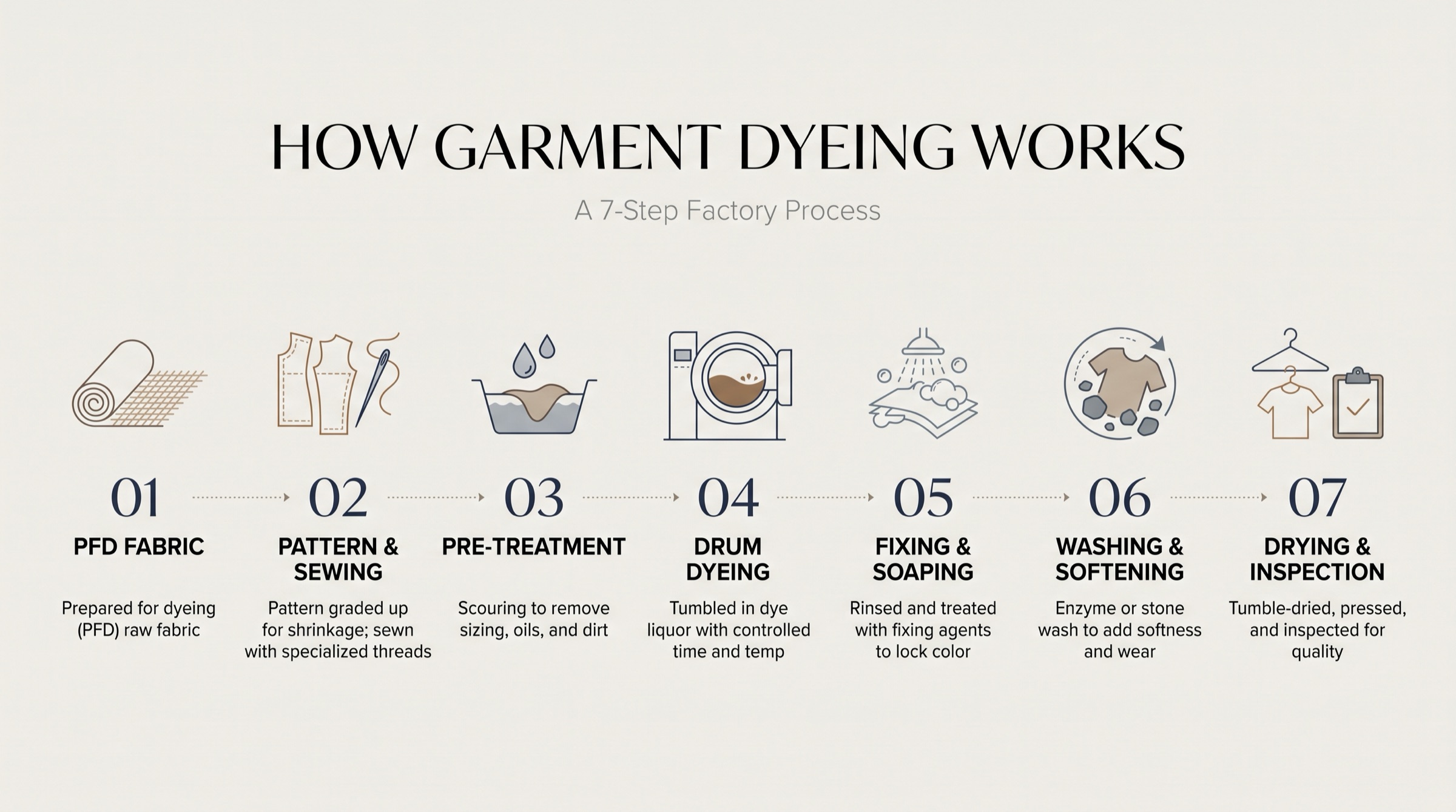
How a garment-dyed shirt or jacket is made, step by step
1. PFD fabric
Everything starts with PFD fabric: "prepared for dyeing". It is woven, scoured and sometimes bleached, but left free of the finishes that would block dye. Typical choices for our categories are poplin and oxford for shirts, twill and canvas for workwear, and corduroy and linen for overshirts.
Ordinary white fabric will not do. Most of it carries optical brighteners, softeners or resin finishes that make it look bright in the shop but stop dye from penetrating evenly. Use regular white fabric and you get patchy, unpredictable color. PFD fabric has to be specified and ordered as PFD from the mill.
2. Pattern allowance and sewing
Because the garment will shrink in the dye bath, the pattern is graded up before cutting. How much depends on the fabric, its weave and the dye and wash recipe, so the allowance is set from shrinkage tests on real garments, not from a general rule. Length and width usually shrink by different amounts, so each direction gets its own allowance.
This is also where the look of the stitching is decided. Cotton thread takes the dye and disappears into the garment. Polyester thread, which is stronger and the usual choice for workwear seams, does not take cotton dyes and stays its original color. That gives a contrast stitch that many brands love. Either is fine, but it has to be a decision, not a surprise.
3. Pre-treatment
Before dyeing, the garments are scoured to remove sizing, oils and dirt picked up during weaving and sewing. Woven fabrics carry more sizing than knits, so this step matters more for shirts and jackets. Anything left on the fabric shows up later as light streaks or patches.
4. Dyeing
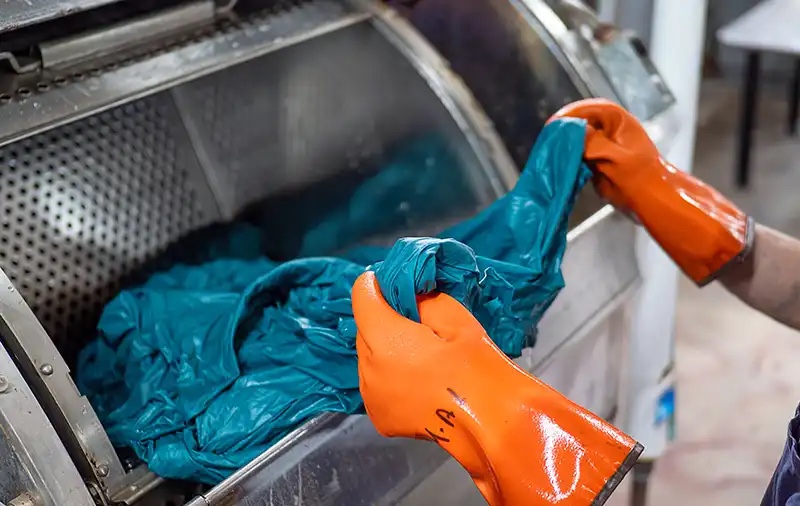
The garments go into a dyeing machine, usually a rotary drum that tumbles them through the dye liquor, or a paddle machine that stirs them in an open tank. Temperature, time, the amount of liquor and the load size are all controlled, because each one changes the final shade.
Load size matters more for jackets than for shirts. A heavy canvas work jacket needs room to move. If the drum is overloaded, the fabric cannot circulate evenly, and you get creases and shade marks where layers pressed together.
5. Fixing and soaping
Once the color is in, it has to be locked in. The garments are rinsed and soaped to wash off any dye that did not bond to the fiber, and a fixing agent may be added. Skip or rush this step and the garment bleeds in the customer's first wash. This is where color fastness is won or lost.
6. Washing and softening
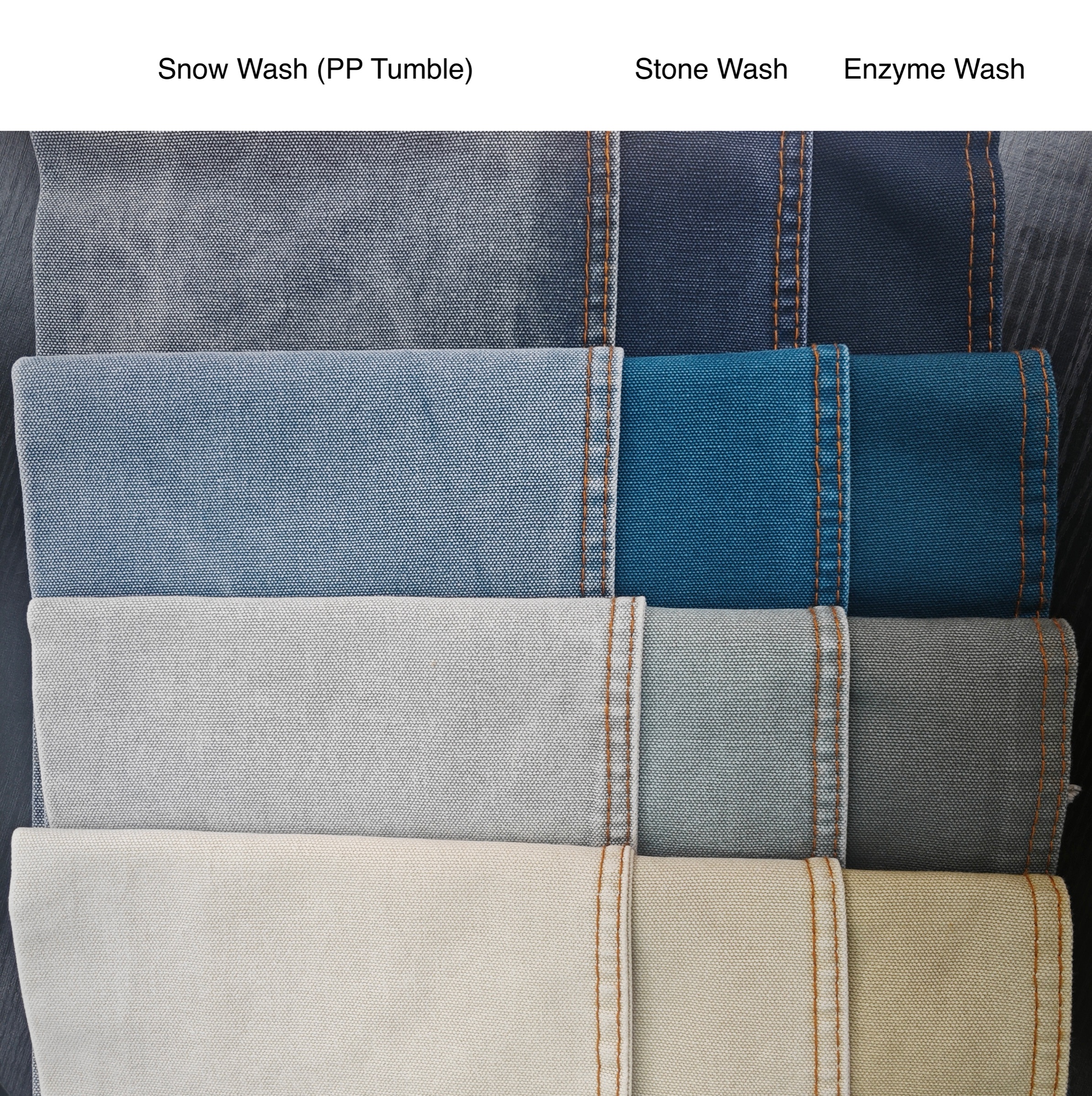
Most garment-dyed workwear is washed again after dyeing. An enzyme wash softens the surface, a stone wash adds wear at edges and seams, and a softener finishes the hand. This step decides how "new" or "broken-in" the garment looks.
7. Drying, pressing and inspection
The garments are tumble-dried, which relaxes the fabric further and adds a little more shrinkage. Shirts then need pressing: collars, cuffs and plackets lose their shape in the drum and must be pressed back. Finally, every piece is checked for shade, measurements and defects before packing.
Dyeing vs. washing: the two halves of the look
Dyeing adds color. Washing takes some of it away, or changes how the surface looks and feels. The garment-dyed workwear you see in stores is almost always both: a dye for the base color, then a wash for character.
The most common washes for shirts and workwear:
- Enzyme wash: removes surface fuzz for a cleaner, softer, slightly faded face. Works on poplin, twill, canvas and linen.
- Stone wash: tumbling with pumice wears edges, seams and pockets for a broken-in look. Best on twill and canvas.
- Sand wash / peach finish: gives a soft, suede-like touch. Popular for shirts and overshirts.
- Overdye: a second color over the first for a deeper, more complex shade.
- Pigment dye: color sits on the surface and fades with wear, like a vintage workwear jacket.
- Acid or snow wash: high-contrast, mottled fading. Mostly for denim, heavy twill and canvas.
- Bleach wash: lightens the whole garment for a sun-faded look.
- Silicone wash: an extra-soft, slightly slippery hand.
Each of these gets its own article in this Garment Dye Guide series.
What garment dyeing changes on a woven garment
Dye type. Reactive dyes give full, clear colors that hold through washing, and are the usual choice for cotton and linen shirts. Pigment dyes sit on the surface and fade with wear, which suits workwear. Sulfur dyes are a traditional choice for dark workwear shades such as black, navy and olive.
Shrinkage. On a T-shirt, a centimeter of shrinkage is easy to live with. On a shirt it changes the collar size and sleeve length, and on a jacket it changes how the shoulders sit. Garment-dyed wovens need shrinkage tested on real garments before bulk production, and the pattern adjusted to match.
Collars and interlining. Shirt collars and cuffs are usually stiffened with a fusible interlining, glued on with heat. Ordinary fusibles can bubble or come loose in the dye bath. Garment-dyed shirts need interlining rated for dyeing temperatures, or a sewn-in interlining instead.
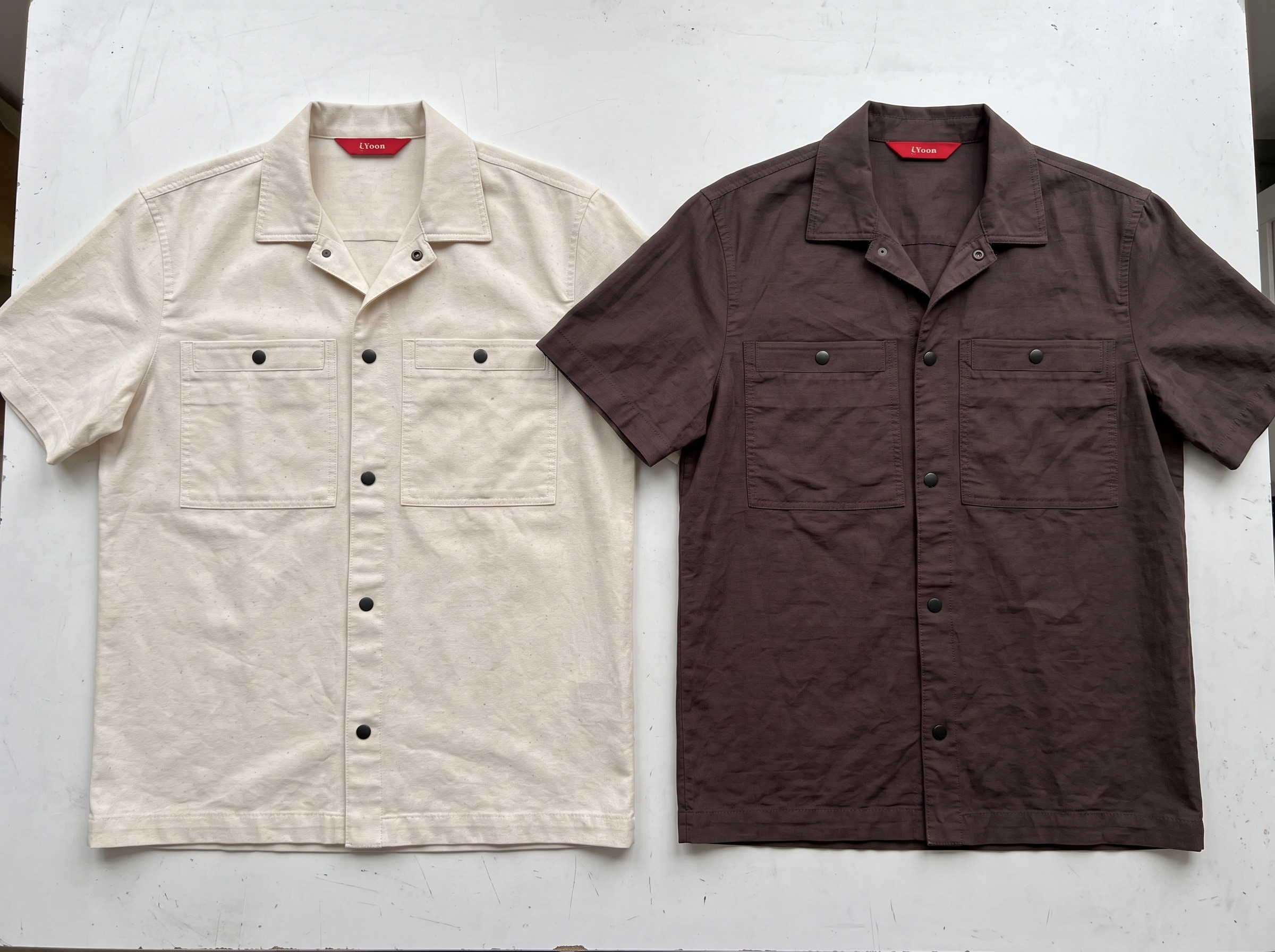
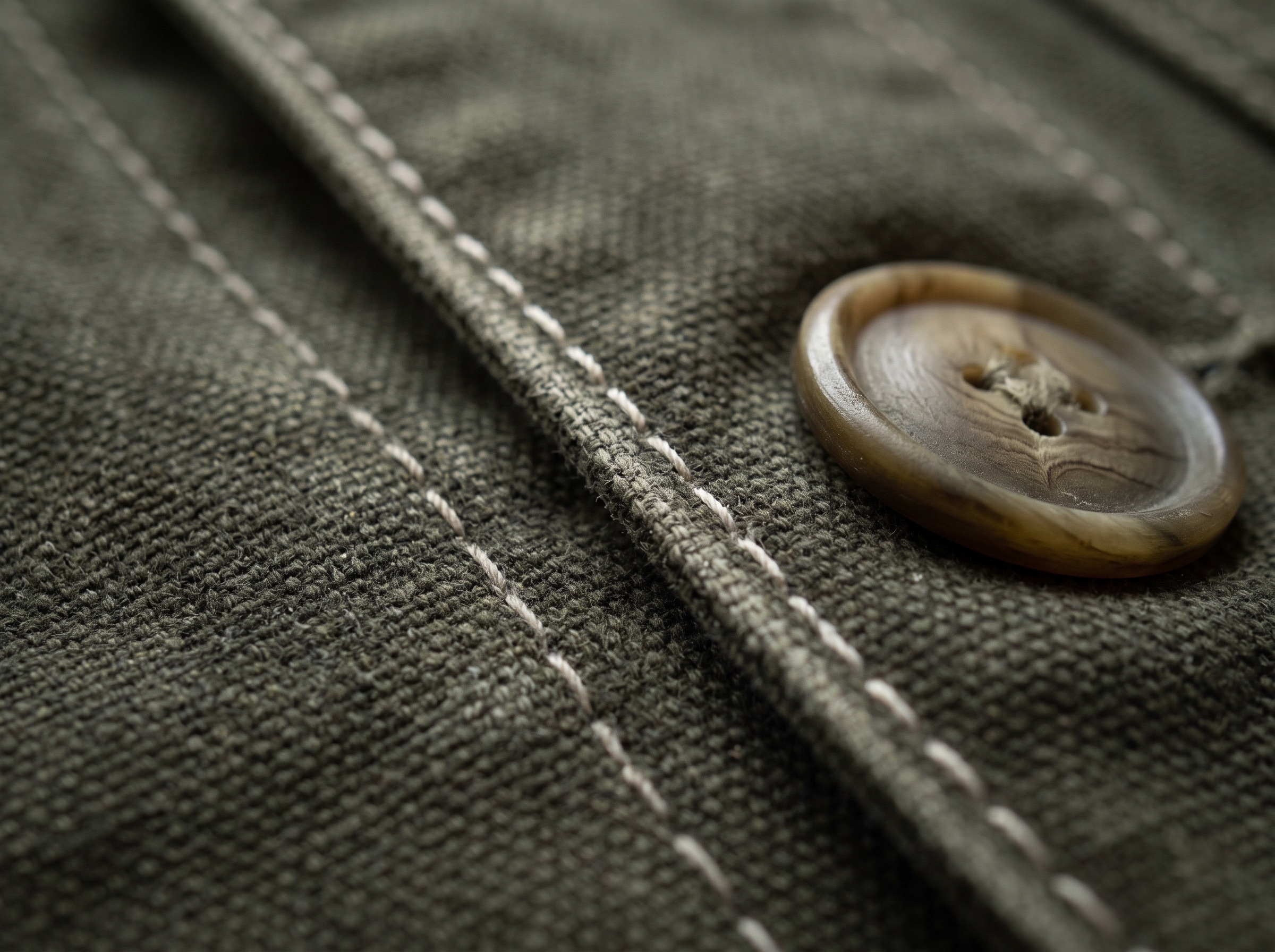
Shade variation. Where fabric is doubled (pockets, plackets, collars, seam allowances), dye reaches the layers differently, so those areas come out a little darker or lighter. That variation is a large part of the garment-dyed look. Good brands use it rather than fight it.
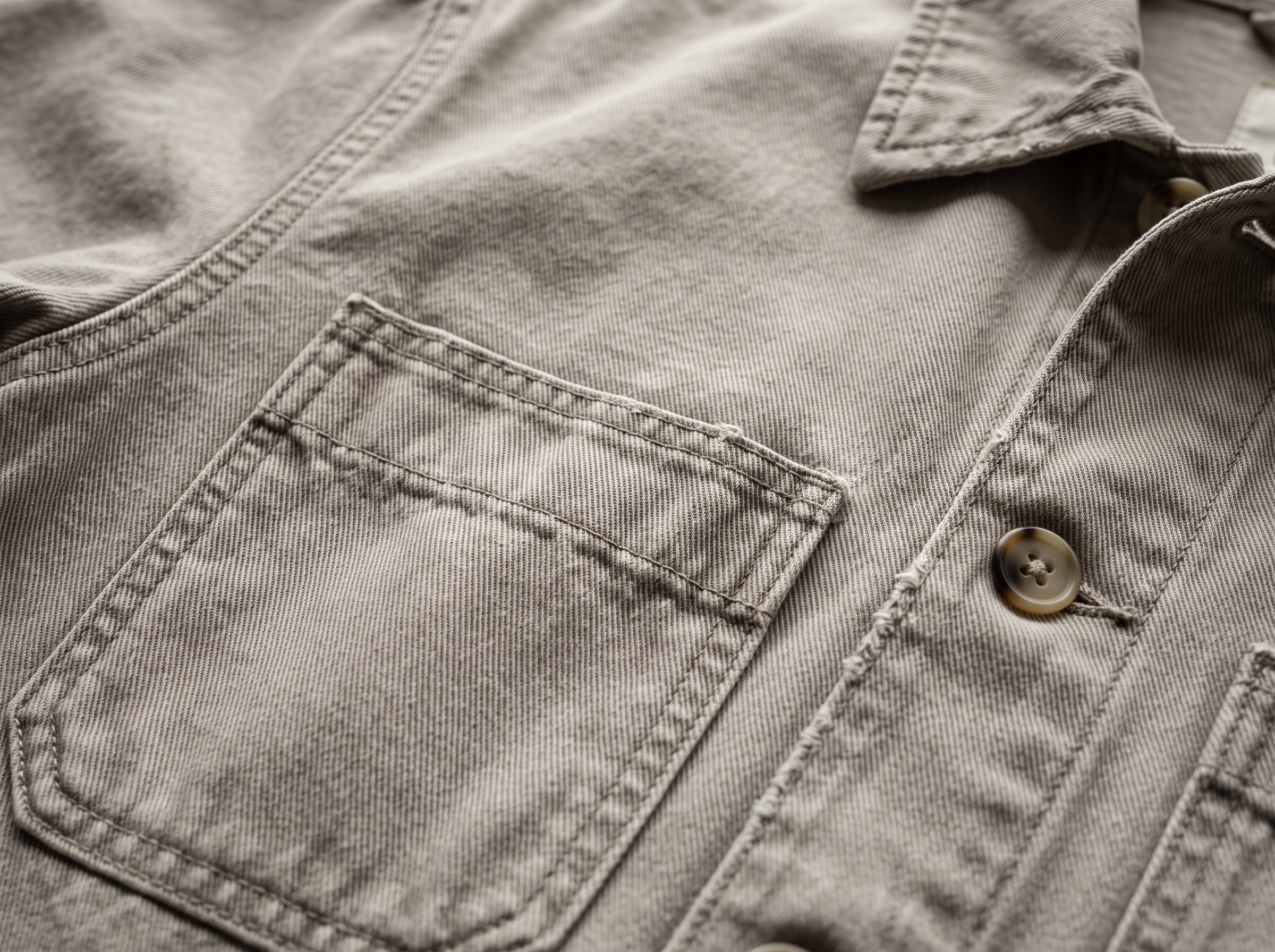
Thread and trims. Everything sewn into the garment goes into the dye bath with it. Polyester thread stays undyed; cotton thread takes the color. Corozo and natural buttons can pick up some color, plastic buttons usually do not, and metal snaps and zips need finishes that will not tarnish. Labels and hangtags are often attached after dyeing.
Fabrics that work best
- Poplin and oxford: the classic shirt fabrics. They take color evenly and soften well in an enzyme wash.
- Twill and canvas: the backbone of workwear. Garment dyeing and washing take the stiffness out of heavy canvas and give it a broken-in look from day one.
- Corduroy: the wales and the base pick up color differently, which gives depth. The pile needs gentle handling so it does not crush.
- Linen: takes color beautifully and comes out soft and naturally creased, though it also shrinks noticeably.
- Flannel: most flannel shirts are yarn-dyed plaids, which garment dyeing cannot create. Solid flannel can be garment-dyed, but the brushed surface needs care.
- Cotton blends: only the cotton takes cotton dyes. A cotton-polyester blend comes out heathered or two-tone, which can be a look in itself.
- Nylon and polyester: these need a different dye system. Mixed-fiber garments can be garment-dyed, with each fiber taking color differently, but that is a specialist job.
How we garment-dye at Lyoon Garment
We cut and sew garment-dyed shirts, overshirts and workwear at our factory in Panyu, Guangzhou. You can see the results across our garment-dyed collection, from the work overshirt to the field jacket.
For dyeing, we work with four garment-dye houses we have partnered with for years. Each has its own strengths: heavy canvas, synthetic fibers, or blended fabrics. We match every program to the dye house best suited to its fabric, instead of forcing every garment through the same line.
A real example. A brand came to us with a work jacket: 2,000 pieces in four colors. When we dyed and washed down the first samples, the different fabrics in the jacket came out at noticeably different shades, because the garment combined natural and synthetic fibers, and each took the dye differently. Together with the dye house, we re-planned the order in which the fibers were dyed and used a different dye class for each one. The bulk order shipped with the fabrics matching across all four colors.
What we do on every order:
- Pre-wash the fabric before cutting, so shrinkage in bulk is predictable rather than a surprise.
- Dye and wash a sample first, and check its color and measurements before bulk starts.
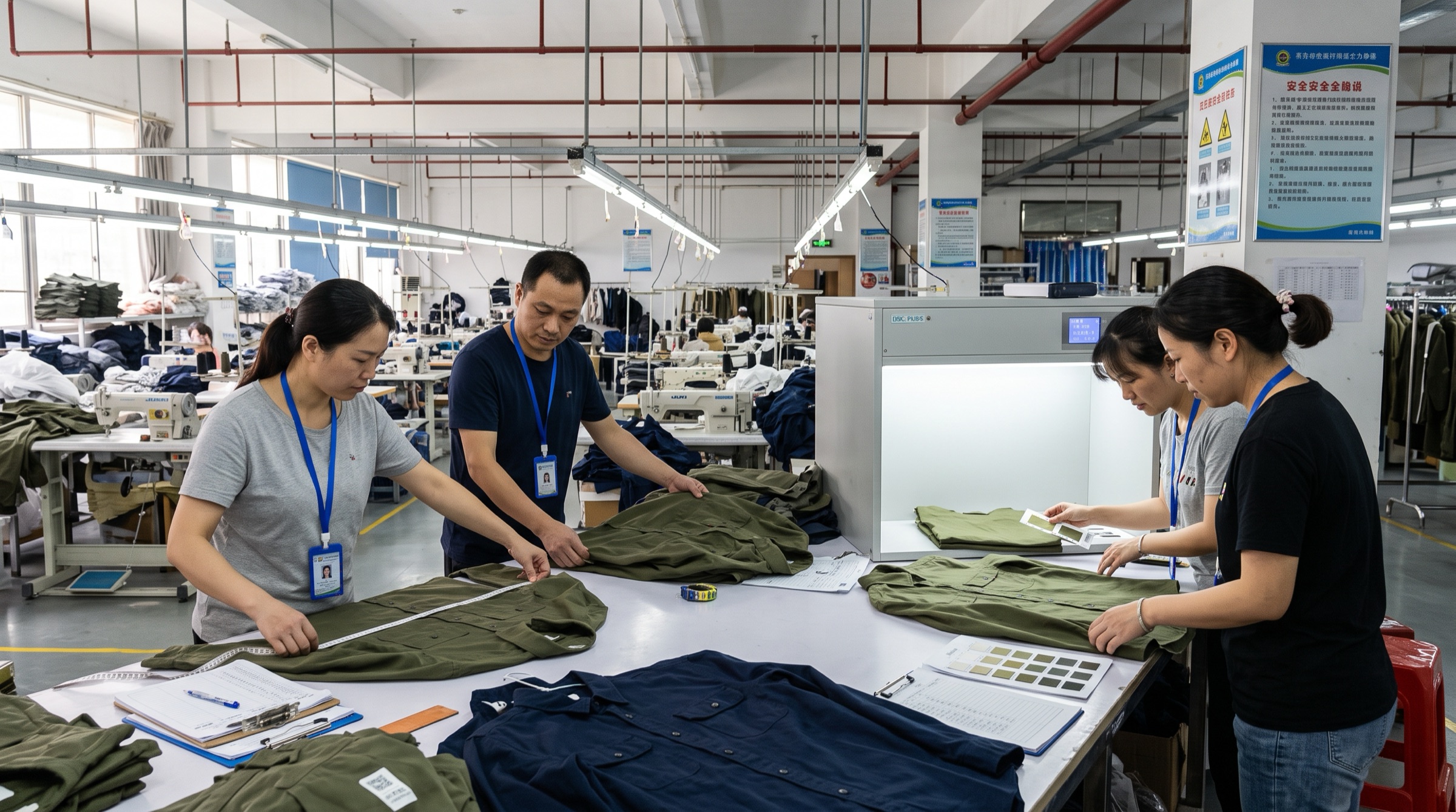
- Match color in a light box against the approved standard.
- Pull samples from every dye lot to check shade and size before the lot moves on.
Our standard minimum is 300 pieces per style. For some programs we can go down to 100 pieces per color. The next article in this series covers ordering in detail: cost, lead times, how to brief a factory, and how garment-dyed goods are tested.
FAQ
Is garment dyeing better than piece dyeing?
Neither is better; they do different jobs. Piece dyeing gives perfectly uniform color. Garment dyeing gives a softer hand, more depth of color and a lived-in look, at the cost of some variation from piece to piece.
Do garment-dyed shirts shrink?
The shrinkage happens at the factory, during dyeing and drying. A well-made garment-dyed shirt is cut larger to allow for it, so it reaches you at the right size and should shrink very little in home washing.
Does garment-dyed clothing fade?
It depends on the dye. Reactive-dyed garments hold their color well. Pigment-dyed garments are designed to fade gradually, like a well-worn work jacket.
Why are the pockets and seams a different shade?
Where fabric is layered, dye reaches each layer differently, so pockets, plackets and seams come out slightly darker or lighter. It is a natural result of the process, and part of what makes the garment look garment-dyed.
Can you garment dye a shirt with buttons and interlining?
Yes, as long as the interlining is rated for dyeing and the buttons and hardware are chosen to survive the dye bath. Both have to be decided before production, not after.
What is the minimum order for garment-dyed shirts?
Our standard minimum is 300 pieces per style. For some programs we can go down to 100 pieces per color.
Planning a garment-dyed shirt or workwear program?
Send us your fabric, colors and quantities, and we will tell you what is possible. Contact our team, or browse our workwear and garment-dyed collections first.
More articles
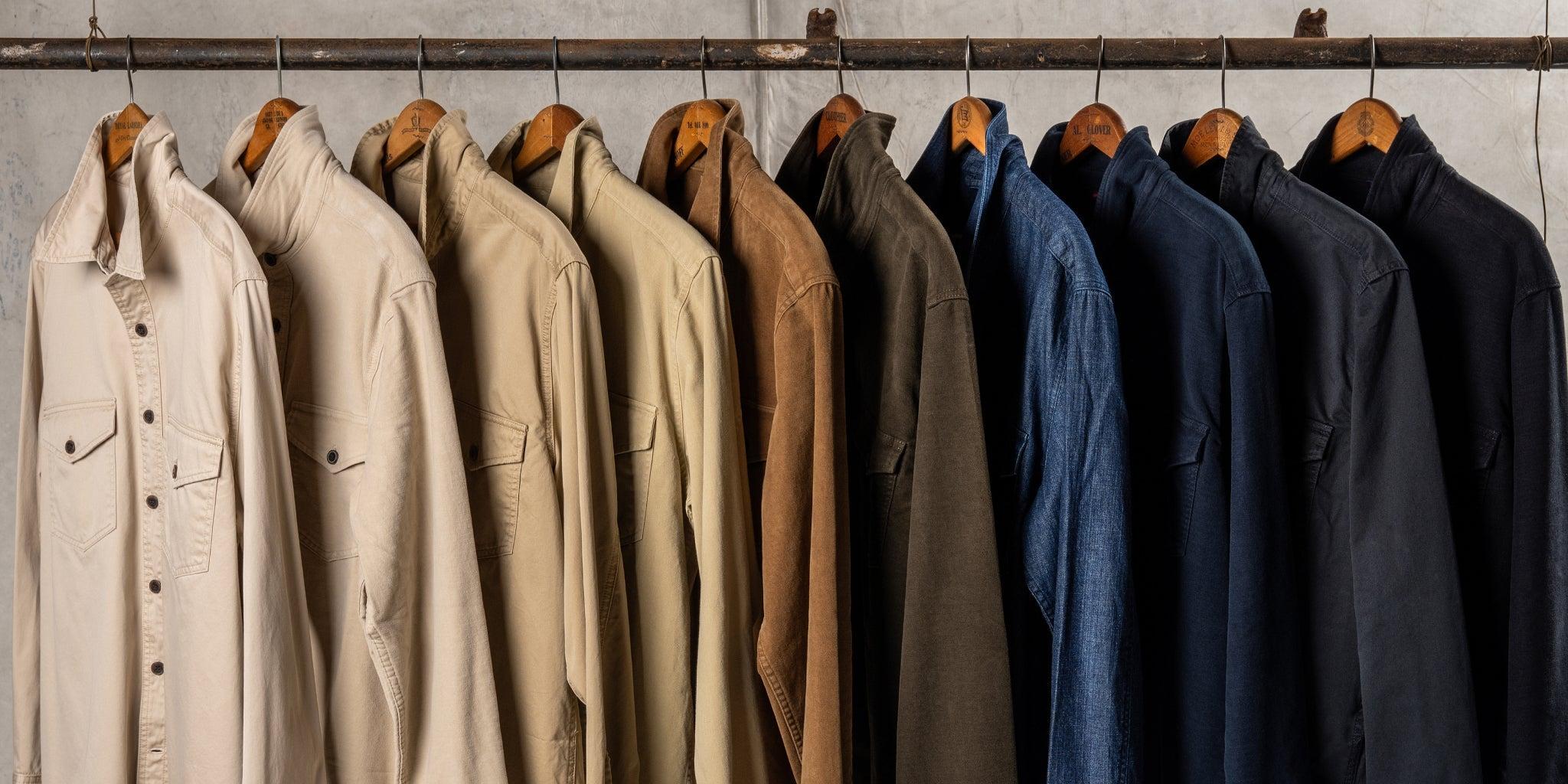
How to Order From a Garment Dyeing Manufacturer: A Step-by-Step Guide
A step-by-step guide to ordering garment-dyed shirts and workwear: the brief, lab dip, dyed sample, bulk and final checks, plus what drives cost and MOQ.
Garment dyeing is a process with a history spanning decades; why has it made a comeback?
Garment dyeing has existed for decades. From Benetton and Massimo Osti to today's workwear and small-batch brands, here is how it evolved and why it is back.
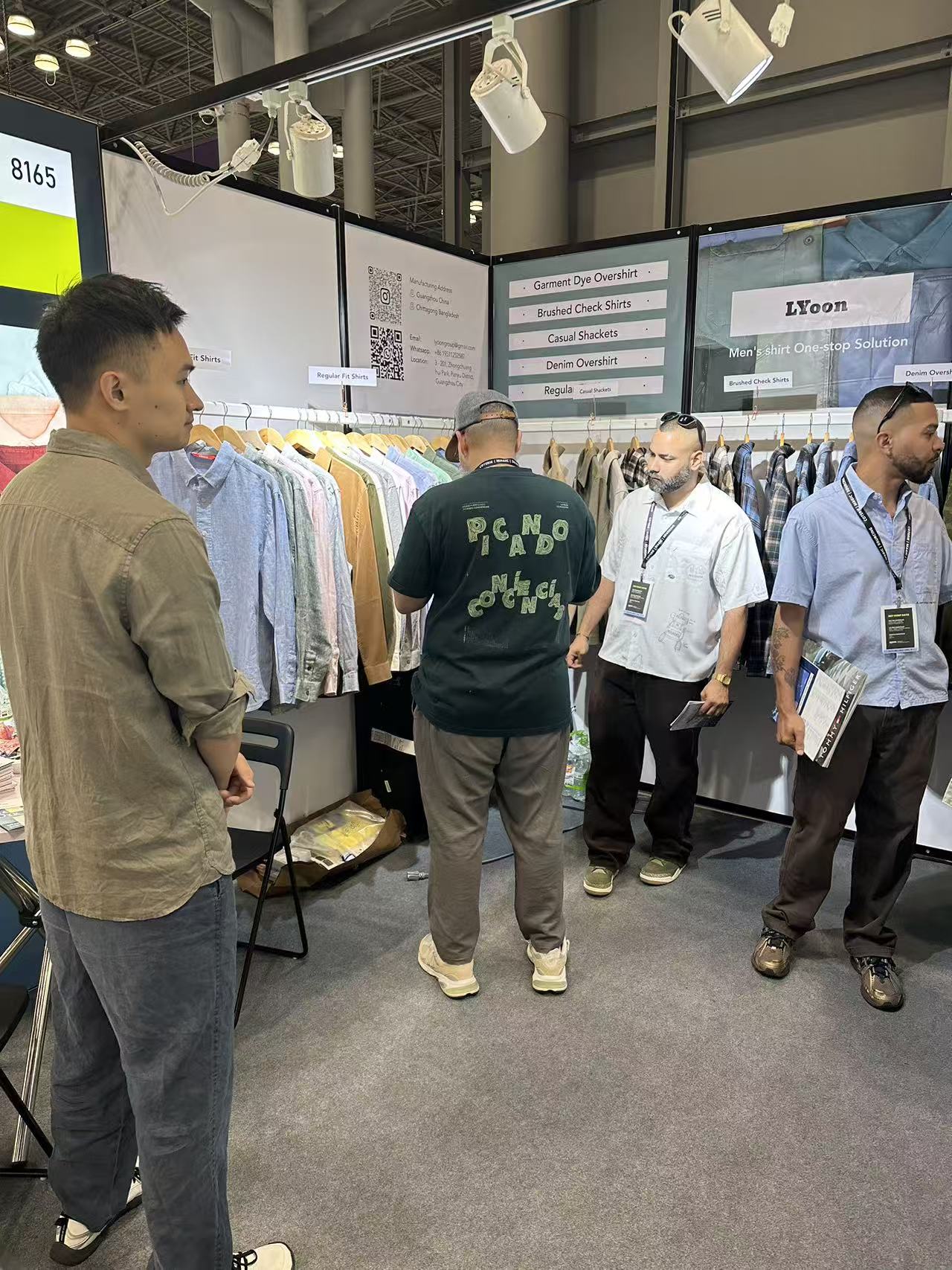
Lyoon at Sourcing by Informa New York, September 2026
From September 9 to 11, 2026 we showed garment-dyed jackets and shirts, flannel and cotton/linen shirts in New York, and met more than 40 brands.