How to Order From a Garment Dyeing Manufacturer: A Step-by-Step Guide
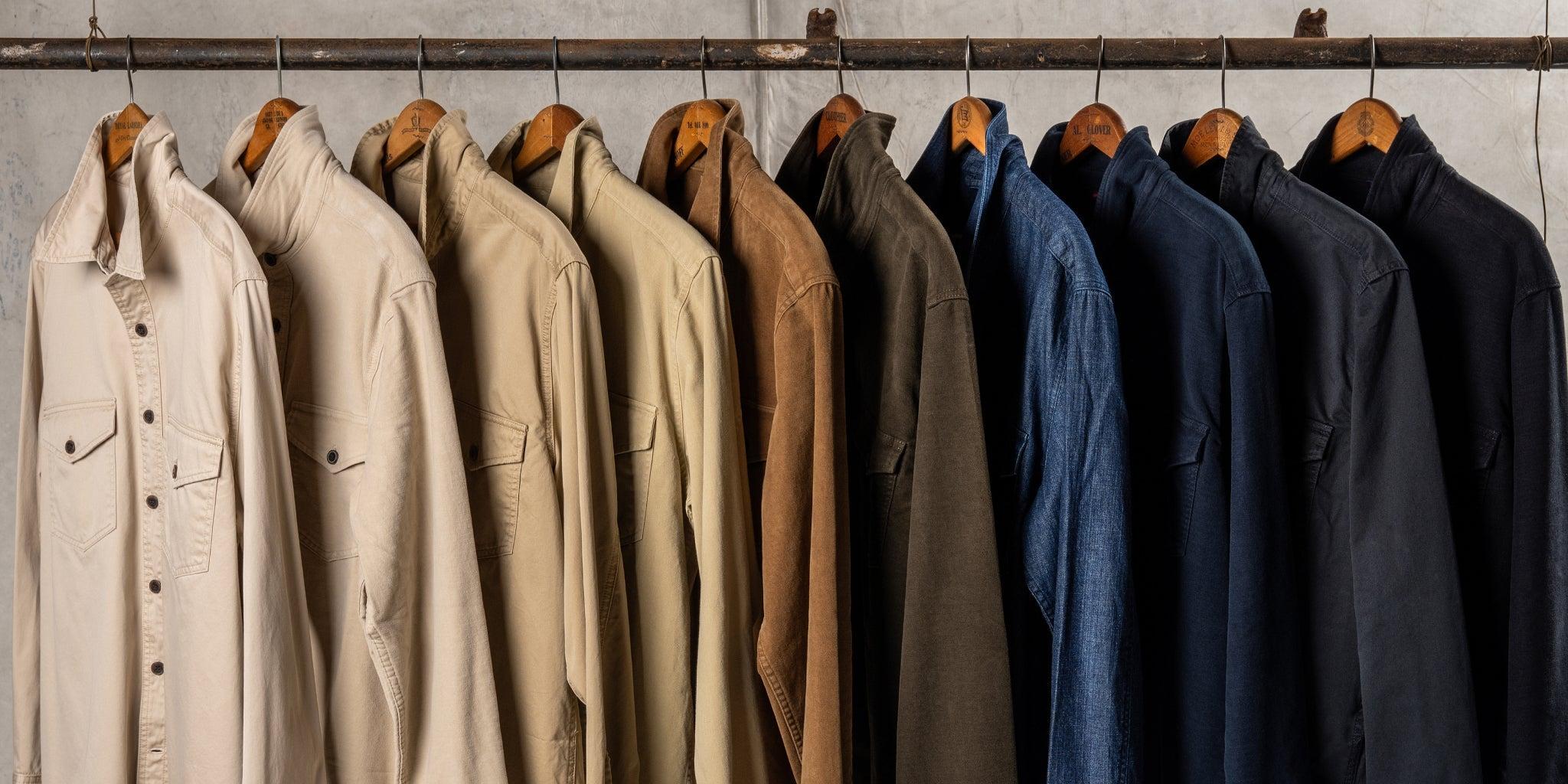
A step-by-step guide to ordering garment-dyed shirts and workwear: the brief, lab dip, dyed sample, bulk and final checks, plus what drives cost and MOQ.
Ordering from a garment dyeing manufacturer takes five steps: brief, lab dip, dyed sample, bulk, and final inspection. Color and size are both confirmed after sewing, so each step has its own checks. This guide walks through them, with checklists you can copy.
New to the process? Read How Garment Dyeing Works first.
Step 1: Send a complete brief
Copy this list into your tech pack or first email. Missing answers are the most common cause of delay.
- Color standard: a physical swatch, a garment to match, or a Pantone TCX number. Physical beats digital.
- Light source: the light the color is judged under. D65 daylight is standard.
- Fabric: composition, weight (GSM or oz) and weave, ordered as PFD (prepared for dyeing).
- Wash: clean, enzyme-soft, stone-washed or faded. Send a reference photo or garment.
- Size chart: finished measurements after dyeing, not before.
- Tolerances: acceptable shade difference between pieces and lots, and measurement tolerance.
- Thread and trims: thread that takes the dye or stays contrast; button material; interlining; metal hardware; labels before or after dyeing.
- Tests: which fastness and shrinkage tests you need, and whether you need third-party reports.
- Quantities and dates: styles, colors, pieces per color, and your launch date.
Don't have every answer? Send what you have. A good manufacturer will help you fill the gaps.
Step 2: Approve the lab dip
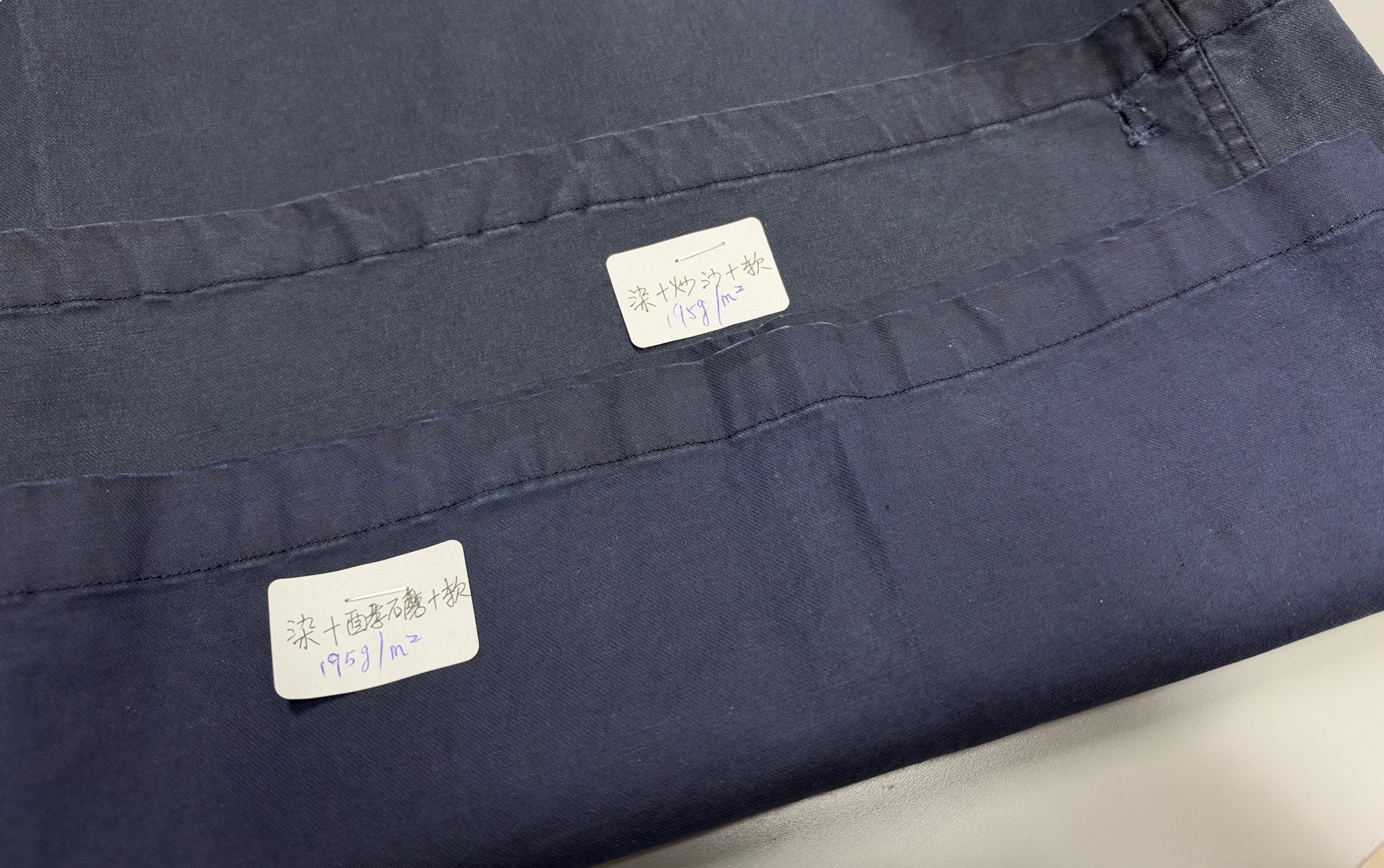
The dye house matches your color on your actual fabric and sends back small dyed swatches or a dyed pant leg, usually two or three options.
How to approve:
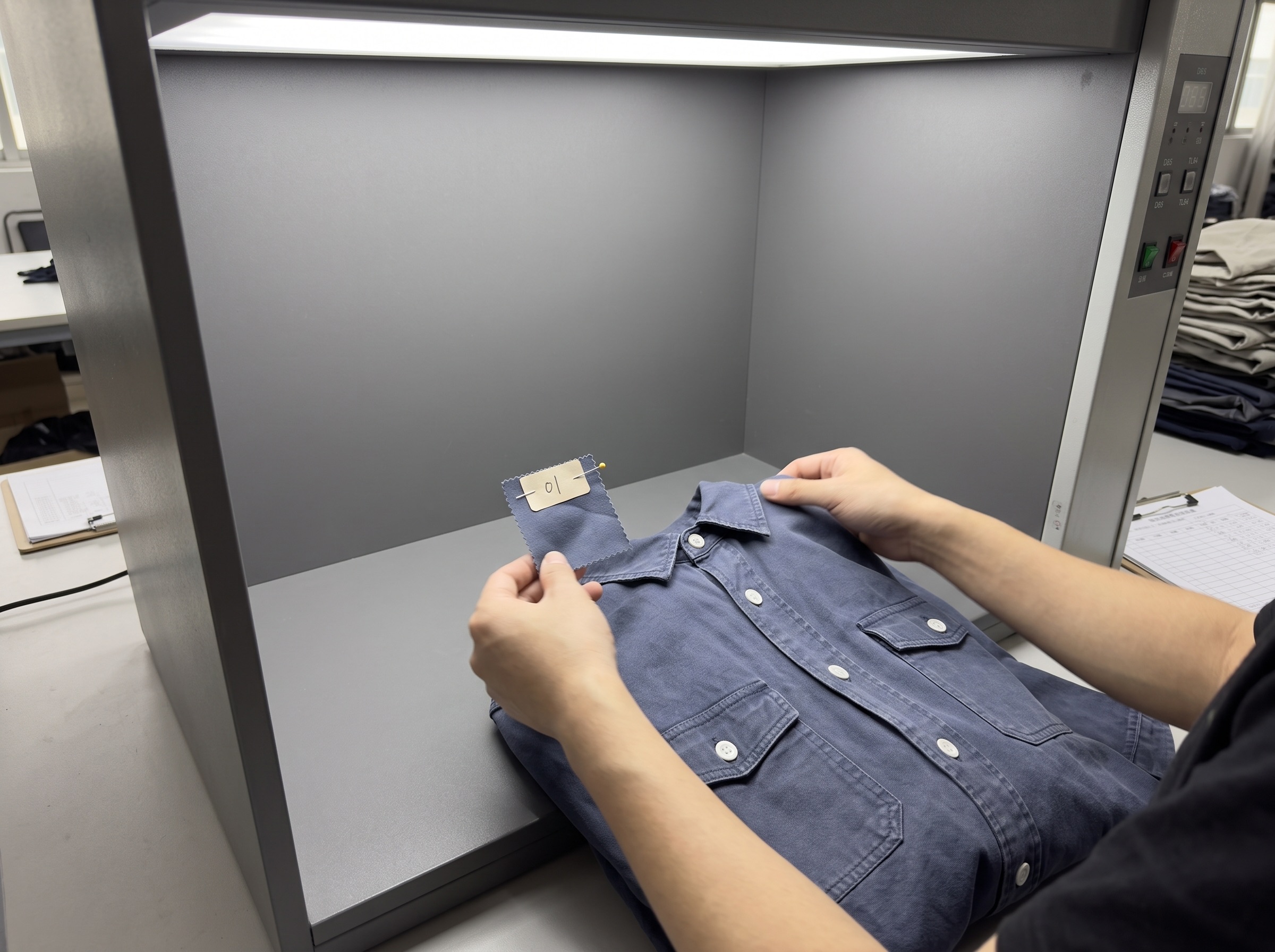
- Compare it with your standard in a light box, under the light source you specified.
- Judge it on the real fabric. The same dye looks different on poplin and on canvas.
- Pick one option and approve it in writing. That swatch becomes the standard for bulk.
Step 3: Check the dyed sample
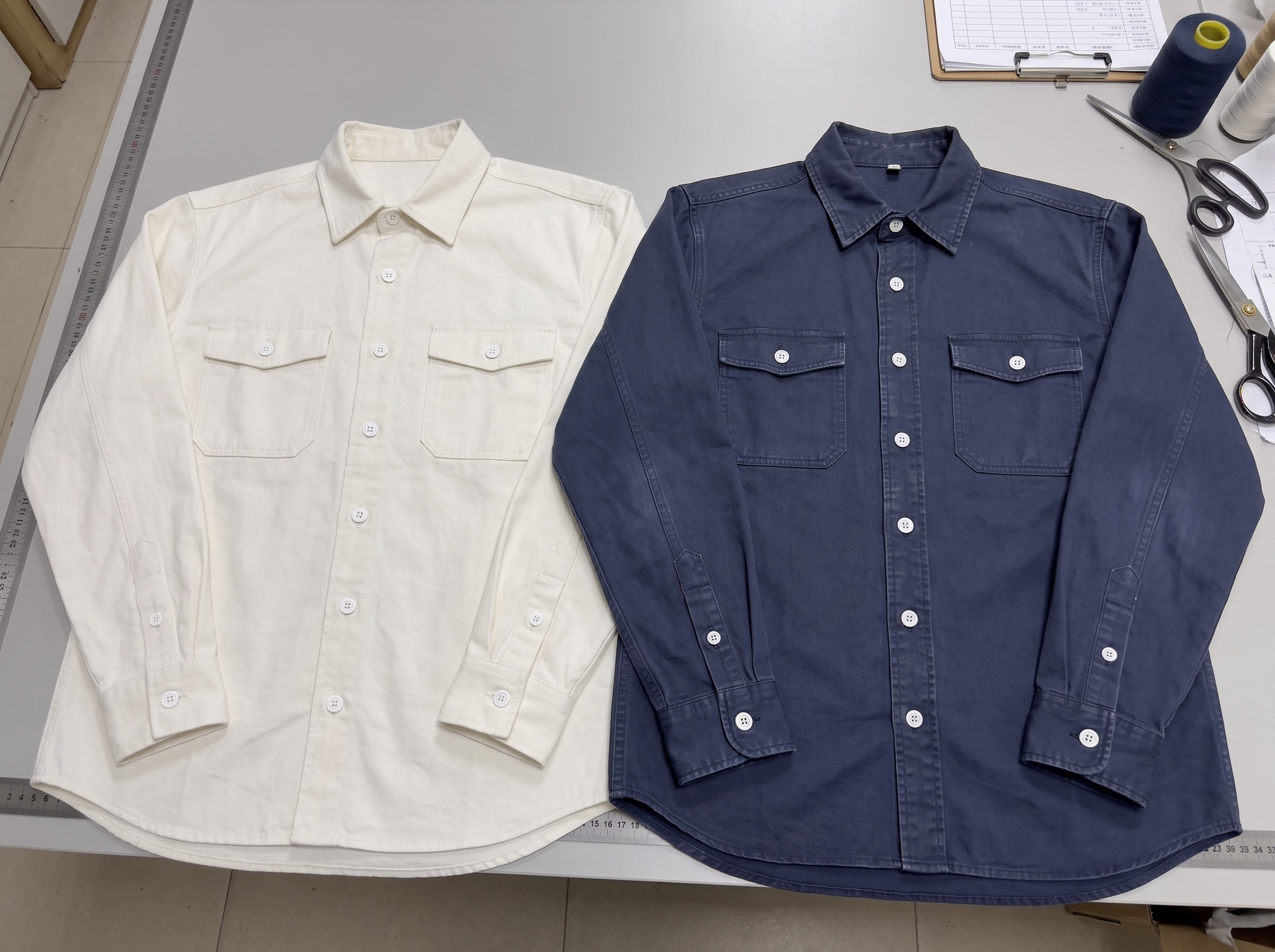
A sample garment is sewn, dyed and washed exactly as bulk will be. Our standard sampling time is 10–15 working days.
Check:
- Color against the approved lab dip.
- Hand and wash effect against your reference.
- Measurements against your size chart. If it shrank more or less than planned, the pattern is corrected before bulk.
- Shirts: collar and placket shape, interlining (no bubbles), buttons undamaged.
- Seams and pockets: shade at layered areas looks intentional, not patchy.
Approve only when color and size are both right. If the pattern changes, ask for a second sample.
Step 4: Bulk production
After approval, bulk runs: cutting, sewing, dyeing, washing, pressing. Our standard bulk lead time is 5–6 weeks.
Ask your manufacturer to:
- Pre-wash the fabric before cutting, so shrinkage is predictable.
- Pull samples from every dye lot and check shade and size before the lot moves on.
- Send lot photos or shade bands if your colors have tight tolerances.
Step 5: Final inspection and tests
Before shipping, check finished goods against the approved sample:
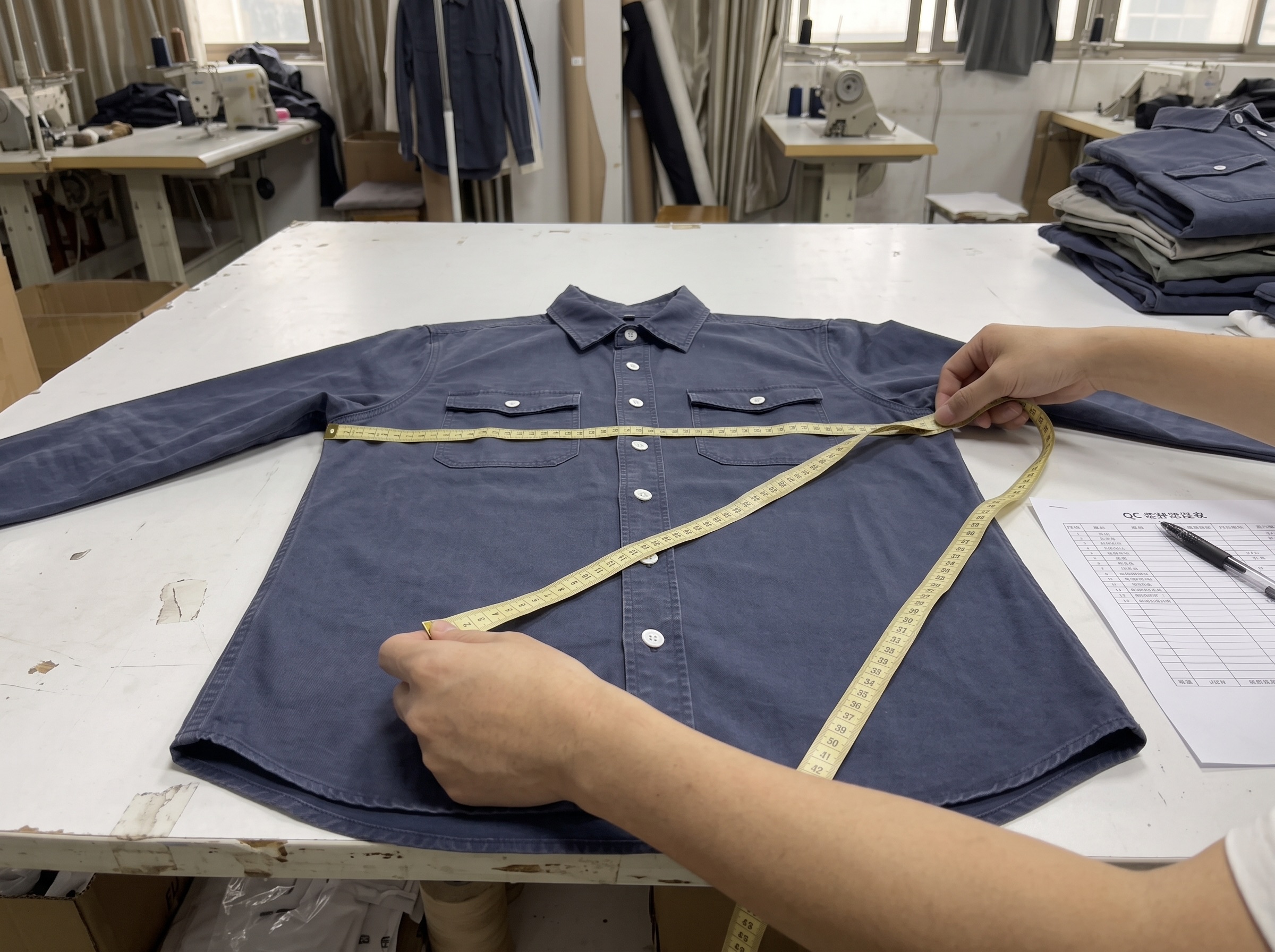
- Measurements, sampled from each color and size.
- Shade within each lot and between lots, in a light box.
- Shirt details: collar shape, interlining, buttons.
- Defects: streaks, drum marks, seam puckering, loose threads.
The lab tests that matter most for garment-dyed shirts and workwear:
- Color fastness to washing: ISO 105-C06 or AATCC 61.
- Color fastness to rubbing: ISO 105-X12 or AATCC 8. Most important for dark colors and pigment dyes.
- Dimensional stability: ISO 6330 with ISO 5077, or AATCC 135. Shows how much the garment still shrinks at home.
We run basic shrinkage and wash-fastness checks in our own factory. Formal testing goes to a third-party lab, which issues the reports.
What drives the cost
- Base garment: fabric, trims and sewing. Usually the largest part.
- Color depth: dark and saturated colors need more dye and rinsing.
- Wash: a stone or enzyme wash after dyeing is a second process.
- Machine space: a heavy canvas jacket takes far more room in the drum than a poplin shirt.
- Number of colors: each color is its own dye lot with set-up and checks, so ten colors at 30 pieces cost more per piece than two colors at 150.
MOQ
Our standard minimum is 300 pieces per style. For some programs we can go down to 100 pieces per color.
Because garments are sewn undyed, you can produce one stock and split it into colors later, which is why garment dyeing suits small, multi-color programs.
FAQ
How long does a garment-dyed order take?
Sampling takes 10–15 working days, and bulk takes 5–6 weeks after sample approval.
Can you match a Pantone color?
Yes, from a Pantone TCX number or a physical swatch. Expect a lab dip on your actual fabric before approval.
How much shade variation should I expect?
Some variation at seams, pockets and collars is part of the look. Variation between lots should be agreed in advance as a tolerance.
Do you provide test reports?
Yes. On request, we send garments to a third-party lab and share the test reports.
Start your garment-dyed program
Send us your brief, even a partial one, and we will reply with what is possible, a lead time and a price. Contact our team, or browse our garment-dyed collection.
More articles
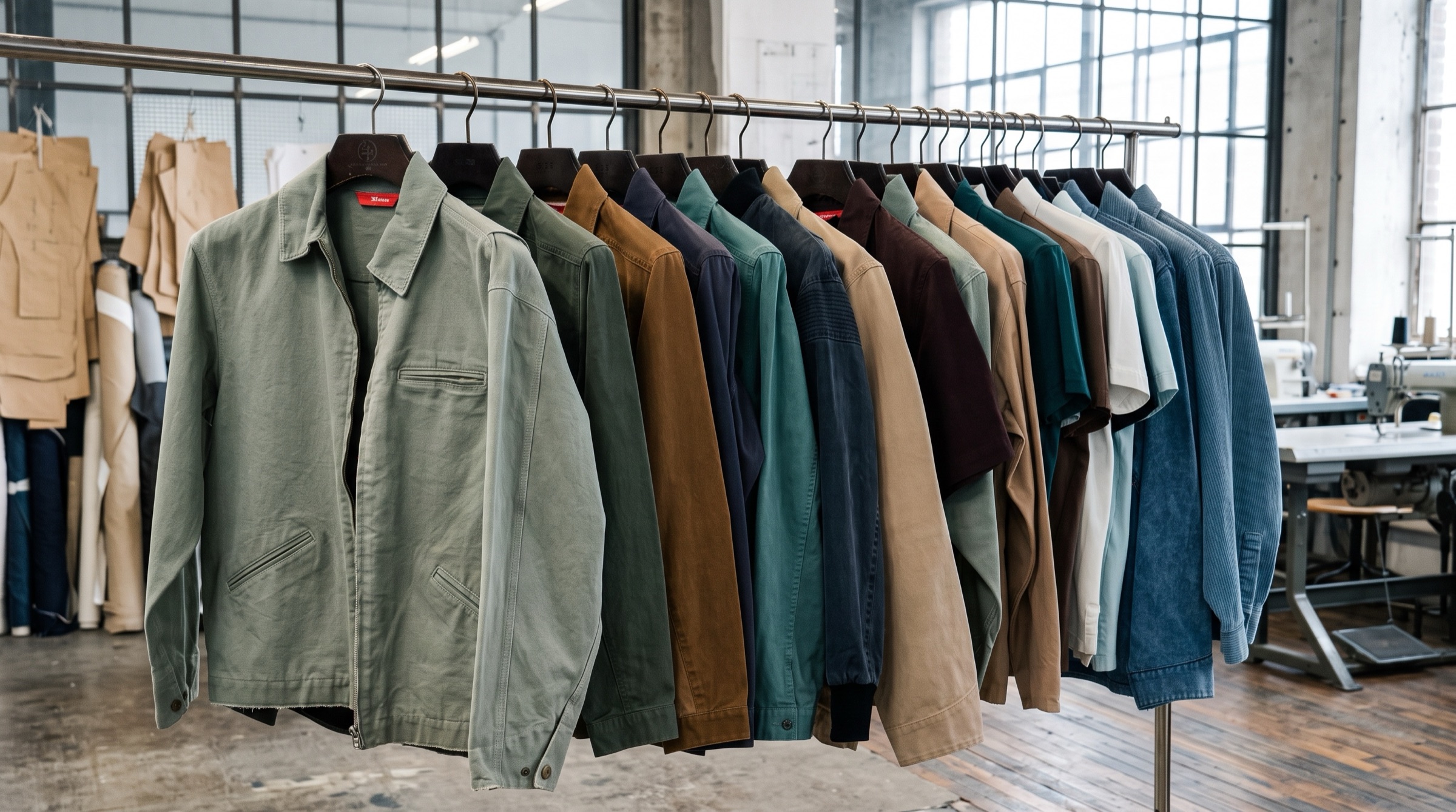
How Garment Dyeing Works: A Factory Guide for Shirts and Workwear
How garment dyeing works on woven shirts, overshirts and workwear, step by step from PFD fabric to the final wash, and what it changes in the finished garment.
Garment dyeing is a process with a history spanning decades; why has it made a comeback?
Garment dyeing has existed for decades. From Benetton and Massimo Osti to today's workwear and small-batch brands, here is how it evolved and why it is back.
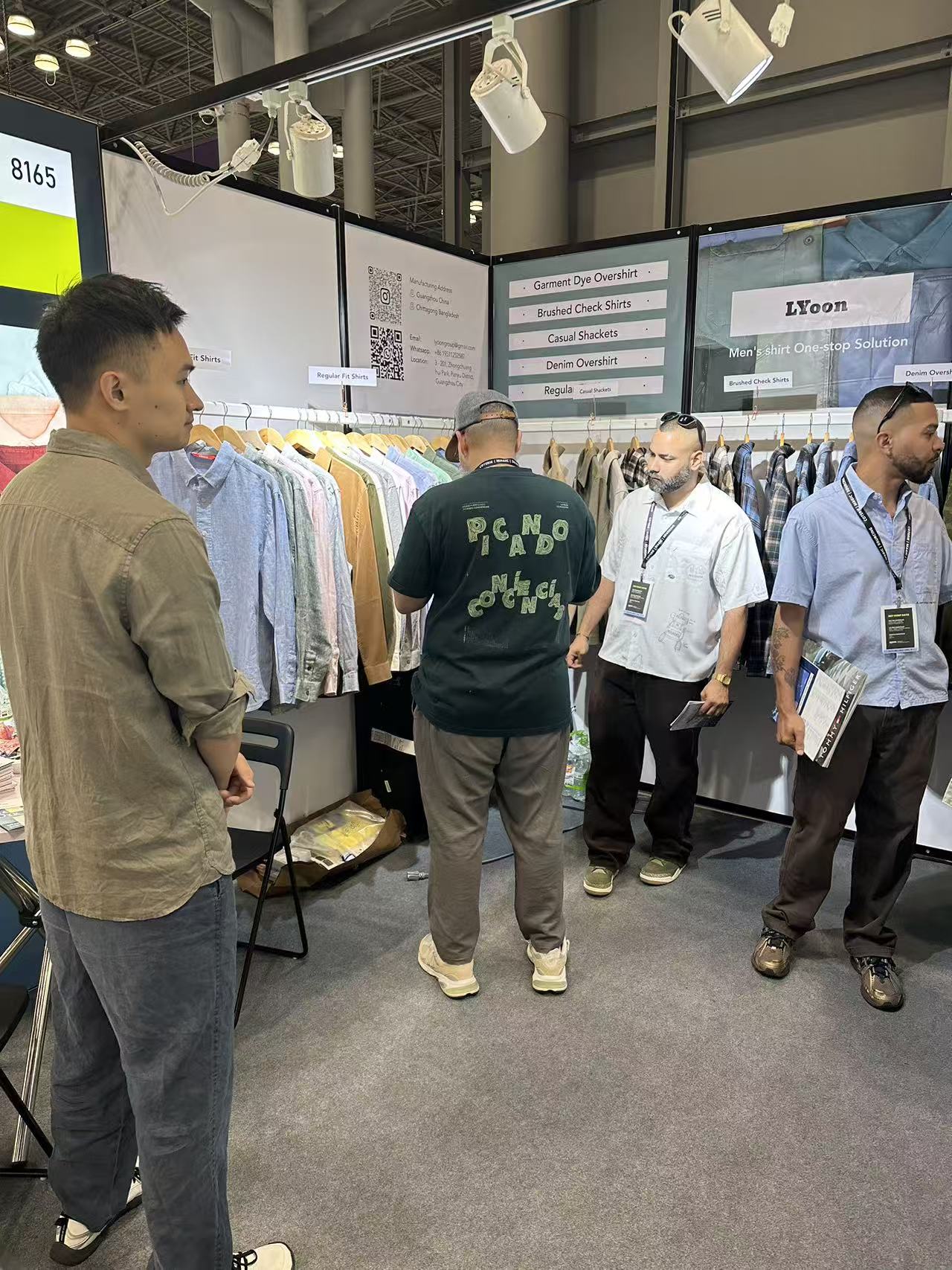
Lyoon at Sourcing by Informa New York, September 2026
From September 9 to 11, 2026 we showed garment-dyed jackets and shirts, flannel and cotton/linen shirts in New York, and met more than 40 brands.